Architecting a Scalable Structure for Rapid Digital Growth
Refining Operational Effectiveness for Agency Teams in 2026
The expense of human capital reached a ceiling in 2026, requiring a shift in how marketing companies structure their day-to-day operations. Firms that as soon as relied on big teams of junior coordinators to deal with manual jobs have transitioned into leaner, more efficient entities. This change is not about changing people but about reallocating their time towards top-level technique and innovative analytical. By incorporating sensible triggers into every stage of the customer lifecycle, firms are finding methods to scale without a direct boost in payroll expenses.In lots of urban business hubs, the approach automation is no longer optional. The speed at which markets move needs instant responses that manual labor can not offer. When a lead enters a system, the contemporary firm utilizes logic-based routing to qualify that lead, designate it to the appropriate department, and initiate a tailored outreach series before a human even opens their inbox. This level of responsiveness has actually become the minimum standard for staying competitive in a crowded market.Strategic combination starts with the recognition of repeated bottlenecks. For many, these bottlenecks occur during the shift from sales to satisfaction. In 2026, making use of API-first architectures permits the automatic production of task boards, Slack channels, and shared drives the minute a contract is signed. This eliminates the administrative lag that typically afflicted the first week of a client relationship.
The Role of Intelligence Reasoning in Competitive Markets
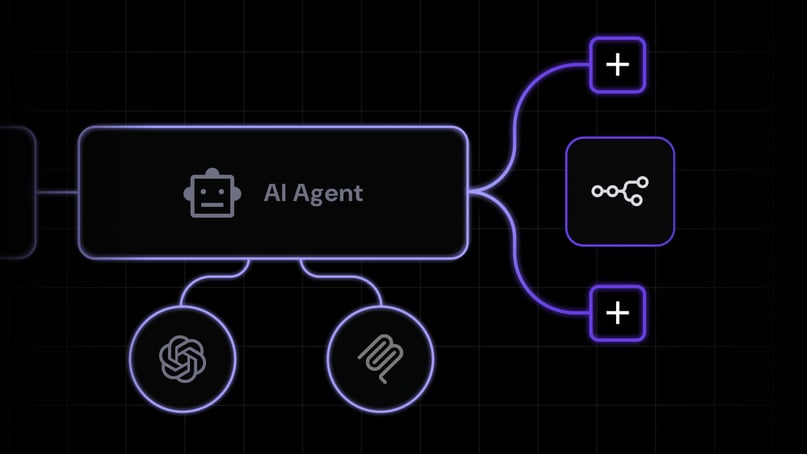
The present year has actually seen an enormous financial investment in what professionals call agentic workflows. Unlike the easy automation of the past, which followed standard if-then rules, these systems can now make low-level choices based on real-time data. If an ad project in the local market sees an abrupt drop in efficiency due to a competitor's aggressive bidding, the system can automatically change budgets or swap out innovative properties based on pre-approved specifications. Management teams are significantly turning to specialized software to deal with these intricacies. Specialists who have a deep understanding of digital services discover themselves at a distinct benefit due to the fact that they can design the reasoning that governs these automated systems. The objective is to produce a self-healing functional environment where minor problems are fixed by software application, leaving just the most complex obstacles for human intervention.Success in this location needs a departure from the "set and forget" mindset. Automation in 2026 is an iterative procedure. It requires constant monitoring and modification to guarantee the reasoning stays lined up with client goals. Agencies that treat their automation stack as a living part of their business instead of a fixed tool are the ones seeing the highest returns on investment. This approach permits them to handle 3 to four times the client volume per account manager compared to old-school models.
Scaling Production Without Increasing Overhead
Imaginative production has actually traditionally been the hardest part of a firm to scale. It is labor-intensive and extremely subjective. However, 2026 has actually brought about tools that permit the mass versioning of creative properties without losing the brand name's voice. Top-level designers now invest their time creating "master design templates" and design guides that automated systems utilize to create numerous variations for various platforms, sizes, and audiences.This shift has altered the task description of the creative director. Rather of reviewing every social media post, they now review the logic and the datasets that inform the automated generation. This makes sure quality control at scale. In growing business districts, this capability enables small firms to pitch for massive nationwide accounts that were previously the unique domain of enormous holding companies.Furthermore, professional digital marketing services has become a staple for firms aiming to supply high-end reporting without the manual labor of data aggregation. By pulling from lots of sources at the same time, these systems can manufacture complex data into clear, actionable insights for clients. This openness builds trust and lowers the frequency of "status upgrade" meetings, which are typically a drain on efficiency.
Data-Driven Insights and Automated Reporting Structures
Customer expectations for openness have never ever been greater. In 2026, supplying a regular monthly PDF report is thought about old. Clients now anticipate live dashboards that show precisely where their budget is going and what the return is at any given moment. Building these dashboards by hand for every single customer would be impossible for a scaling firm, which is why automated data pipelines are essential.These pipelines do more than simply display numbers; they interpret them. Natural language generation tools can now write the preliminary draft of a performance summary, highlighting wins and determining locations for improvement. The account manager then reviews and modifies this draft, including the human context that a device might miss out on. This partnership in between human instinct and maker speed is the hallmark of a successful 2026 agency.The monetary advantages of this method are clear. When reporting and information analysis are automated, the company can use more competitive rates while keeping higher margins. It likewise minimizes the threat of human mistake in data entry, which can lead to costly errors in budget plan management or strategic instructions. Precision in reporting is a major consider client retention in any major market.
Future-Proofing Firm Success

As we look towards the later half of 2026, the distinction between "marketing company" and "technology company" continues to blur. The most lucrative companies are those that own their own exclusive workflows and automation reasoning. This copyright becomes a value-add for clients, making it harder for them to switch to a competitor who may have a different, less effective process.The concentrate on performance likewise improves the internal culture of the agency. When workers are no longer bogged down by soul-crushing manual tasks, job complete satisfaction tends to rise. This results in lower turnover rates and more stable client relationships. In a market understood for burnout, the strategic usage of automation is showing to be a main driver of long-term sustainability.Agencies should stay nimble, as the tools readily available are constantly progressing. What operate in early 2026 might be changed by a more efficient service by the end of the year. The secret is to preserve a culture of experimentation. By constantly testing brand-new integrations and fine-tuned reasoning, a company can ensure it stays the most effective option for its clients, no matter how the market shifts. The focus stays on outcomes, and in 2026, results are powered by the clever application of automated systems.